Sub 60 10k: the numbers
1:00:00 over 10 km is 6:00 per km, or 9:39 per mile. At even pace you reach halfway in 30:00. With a 2% negative split, aim for 30:18 at halfway and 29:42 for the second half: your first km at 6:07, the last ones near 5:55.
For a "sub" goal, set the band a little under the round number, for example 59:45, so a slow drinks station doesn't cost you the goal.
Questions
What is a pace band?
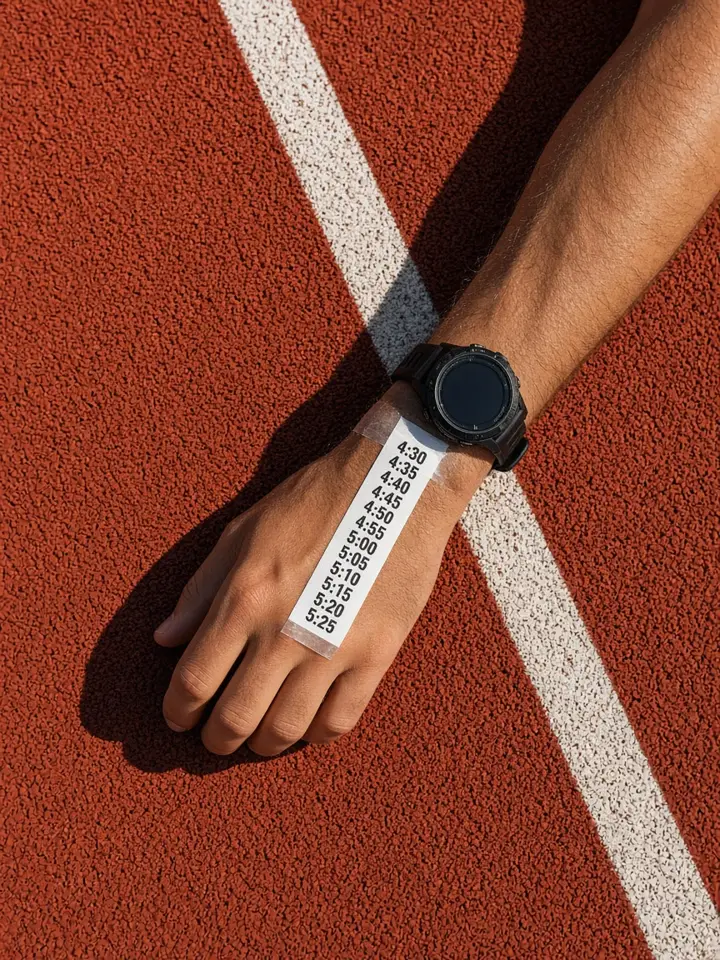
A narrow strip of paper you wear on your wrist with the elapsed time you should see at each km or mile marker. Glance at it as you pass a marker, compare it with your watch, and you know straight away whether you are ahead or behind your goal.
Should I run even pace or a negative split?
Most coaches suggest even effort with a slightly faster second half: start a few seconds per km slower than goal pace and finish faster. A 1 to 2% negative split is a safe plan for a marathon. Going out too fast costs far more at the end than it saves at the start.
How does the hilly course plan work?
Upload your race's GPX file. Clockwork works out the gradient every 50 m and plans the same effort all the way: slower up the climbs, quicker down the other side, still finishing on your goal time. The uphill and downhill cost comes from published research on the energy cost of running on slopes, softened to match how runners actually pace.
Why do my watch splits not match the markers?
GPS watches usually measure a race a little long, often by 0.5 to 1%, because you don't run the exact racing line. Check the band against the official markers, not your watch's auto-lap beeps.
How do I print it at the right size?
Tap Print band, then set the scale to 100% (or Actual size) and turn off Fit to page. Check the 50 mm scale line with a ruler. Cut along the edge, wrap it round your wrist and cover it with clear tape to keep it dry.
Is it free? Is my course uploaded?
Free, no account. Your GPX file is read on your phone and never uploaded. Your plan is saved on this device and in the share link.